Sativa, Indica, Hybrids, and Cannabis ruderalis

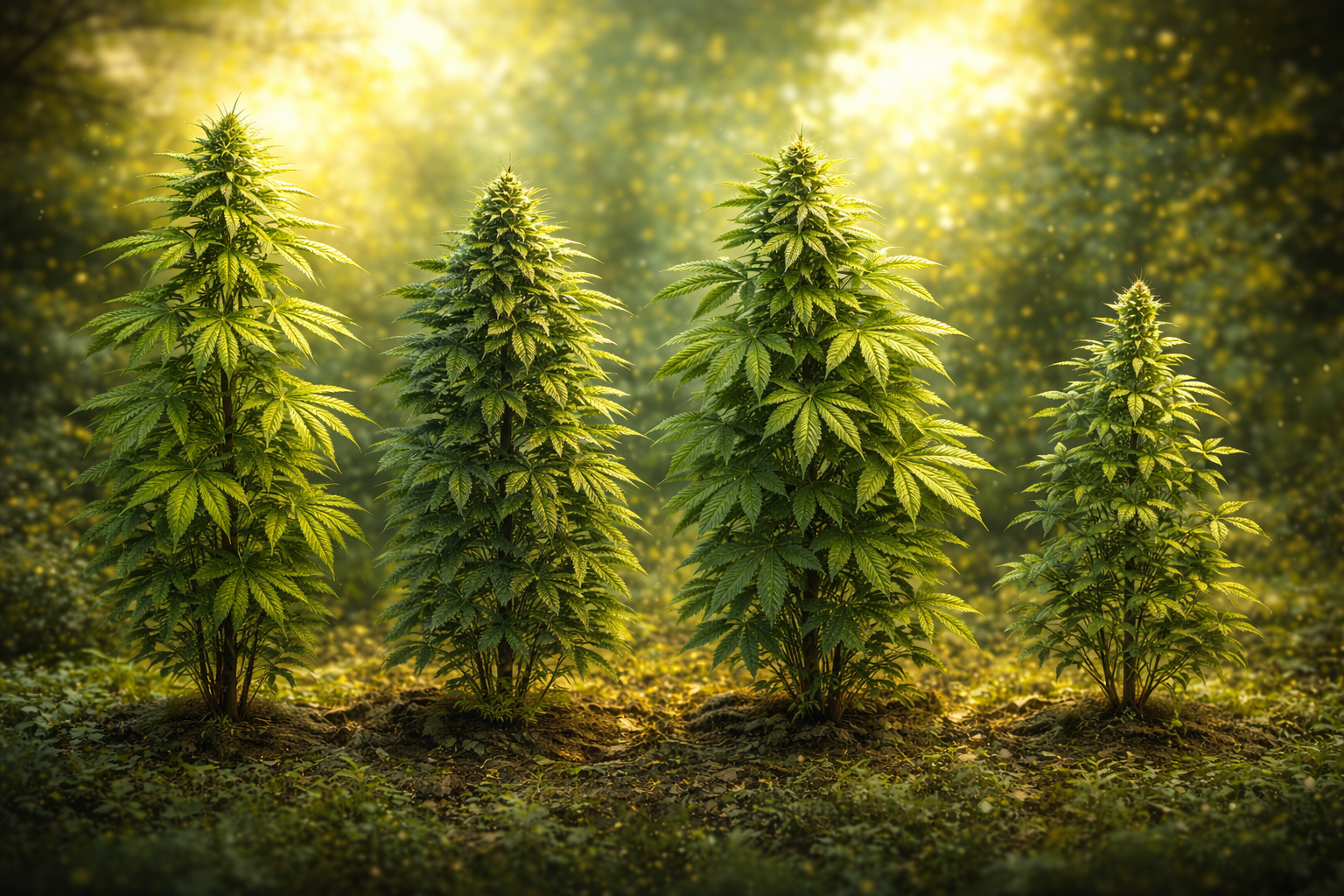
Characteristics and Differences
When searching for the “right” medical cannabis strain, people frequently encounter the classification into Sativa, Indica, and hybrid cannabis flowers.
This classification is now considered controversial.
Due to both random and intentional crossbreeding, nearly all strains available on the medical market today are hybrids.
The original classification, based on geographical origin, can now be differentiated much more precisely thanks to advances in laboratory and analytical methods. Information provided by manufacturers regarding cannabinoids, as well as published terpene profiles, offer more targeted and symptom-oriented selection criteria.
Nevertheless, available cannabis flowers are still based on Sativa, Indica, and Cannabis ruderalis varieties. Each of these types originally had its own characteristics as a landrace.
These differences exist on geographical, historical, and chemical levels.
Through both random and deliberate crossbreeding of genetics, often in pursuit of more potent strains, countless hybrid varieties have emerged.
Cannabis Sativa
Origin, Growth, and Structure
Cannabis sativa originally comes from tropical regions of Africa, Asia, and Latin America.
These genetics are characterized by tall growth, often exceeding two meters, with slender stems and long, narrow leaves.
The flower structures are elongated and airy, which can lead to higher yields.
Potential Effects
Cannabis sativa strains are often associated with stimulating and euphoric effects.
They may help elevate mood and enhance creativity.
They are often consumed during the daytime.
Cannabis Indica
Origin, Growth, and Structure
Indica strains originate from regions of the Hindu Kush mountains in Central Asia and are known for their relaxing and calming effects on the body.
These strains typically grow in cooler climates with shorter summers.
Cannabis indica plants generally have a compact, bushy growth structure.
They have broader leaves compared to sativa plants and tend to grow more horizontally than vertically. Indica plants usually reach heights of 1 to 2 meters, although this can vary depending on the strain.
The leaves of cannabis indica are broad and thick compared to the narrow leaves of sativa plants.
The flower structures are dense and compact, often resulting in higher yields.
Indica strains also have a shorter flowering time compared to sativa strains.
Potential Effects
The potential effects of cannabis indica are often described as relaxing, calming, and physically soothing.
Indica strains are frequently used to help relieve insomnia, pain, muscle spasms, and stress.
Cannabis Ruderalis
Origin
Cannabis ruderalis is a lesser-known type of cannabis plant that originally occurs in Central Asia and Northeastern Europe.
This variety has adapted to harsh climatic conditions and is known for its robustness and resilience.
Effects and Composition
Compared to the more well-known cannabis sativa and cannabis indica, ruderalis generally has a lower THC content.
This means that its psychoactive effects are less pronounced.
The plant often contains higher levels of CBD.
Its effects may be relaxing and calming.
Special Characteristics
One of the most notable characteristics of cannabis ruderalis is its short flowering time.
These plants flower independently of light cycles, a trait known as autoflowering.
The plant automatically enters the flowering phase after a certain growth period.
No change in the light cycle is required.
This characteristic makes ruderalis particularly attractive to breeders.
Because these plants grow faster and are less sensitive to light fluctuations, breeders can achieve multiple harvests per year.
This allows for more efficient use of cultivation space and faster availability of products.
Additionally, breeders can cross ruderalis with other strains to create new hybrids that combine autoflowering traits with the desired effects of sativa or indica.
Hybrids
Hybrid strains are crosses between cannabis sativa and cannabis indica.
As a result, they can exhibit a wide range of characteristics.
Origin, Growth, and Structure
Cannabis hybrid strains are created by crossing sativa and indica plants to combine desired traits.
These strains vary in appearance, height, leaf shape, and yield.
They display characteristics of both parent plants.
Growth height, leaf structure, and flower formation can differ depending on the specific strain.
Potential Effects
The potential effects of hybrid strains vary depending on their genetic composition.
They combine characteristics of both sativa and indica and can produce a wide range of effects.
Some hybrids are considered balanced and may provide both relaxing and stimulating properties.
Others may lean more toward one parent type and therefore have either more calming or more stimulating effects.
Important Note
The simple distinction between Sativa, Indica, Hybrid, and Cannabis ruderalis is not always straightforward.
Many modern strains are crossbreeds.
When selecting a cannabis strain for medical purposes, it is advisable to focus on the specific symptoms or conditions to be treated and to consider the terpene profile of the cannabis flowers.
Further details below
This article is for informational purposes only and is not a substitute for medical or therapeutic advice. If you have any health-related questions, please consult a doctor or another qualified professional.