The Endocannabinoid System (ECS)

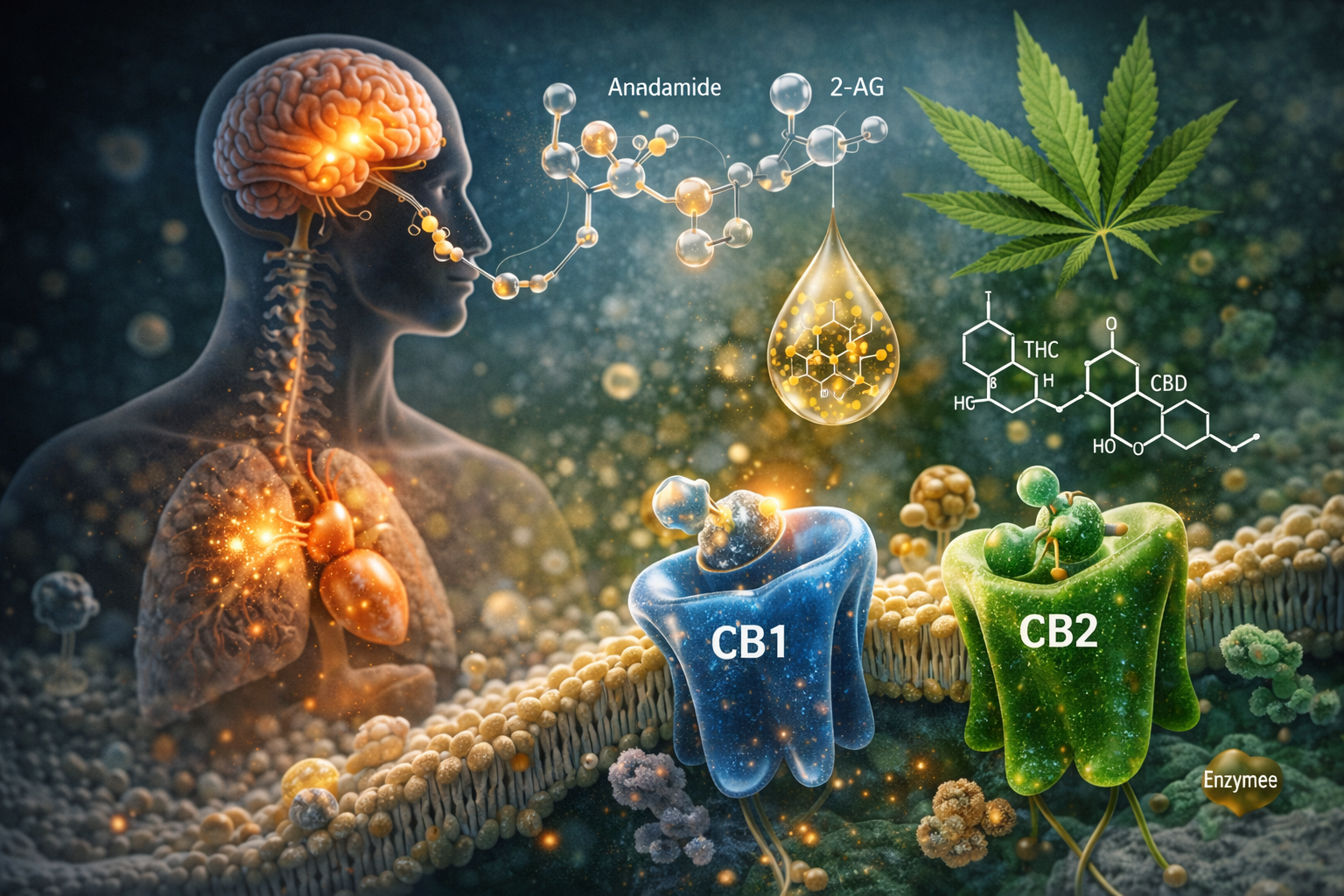
The Endocannabinoid System
The body’s internal system for balance
The human body has its own biological system that plays an important role in many fundamental bodily functions: the endocannabinoid system (ECS).
This system helps maintain balance in numerous processes in the body and allows it to respond to changes.
The endocannabinoid system consists of three main components: receptors, endogenous signaling molecules (endocannabinoids), and enzymes.
Receptors act as docking sites on cells.
When endocannabinoids bind to these receptors, they can influence signaling processes in the body.
Enzymes then ensure that these signaling molecules are broken down again, so their effects last only as long as needed.
The ECS is active throughout the entire body.
It plays a role in regulating various processes, including pain perception, sleep, mood, appetite, stress responses, and immune system functions.
Its primary role is to maintain the body’s internal balance.
In biology, this is referred to as homeostasis.
There is also an interesting connection to the cannabis plant.
Compounds from cannabis, known as phytocannabinoids, can interact with the endocannabinoid system.
This is because they are partly similar in structure to the body’s own cannabinoids.
As a result, they can bind to ECS receptors or influence their activity.
These interactions help explain why cannabis can affect various processes in the body.
“The endocannabinoid system is a lipid signaling system that plays a key role in the regulation of homeostasis.”
Source
Learn more about the endocannabinoid system
This article is for informational purposes only and is not a substitute for medical or therapeutic advice. If you have any health-related questions, please consult a doctor or another qualified professional.