The Entourage Effect

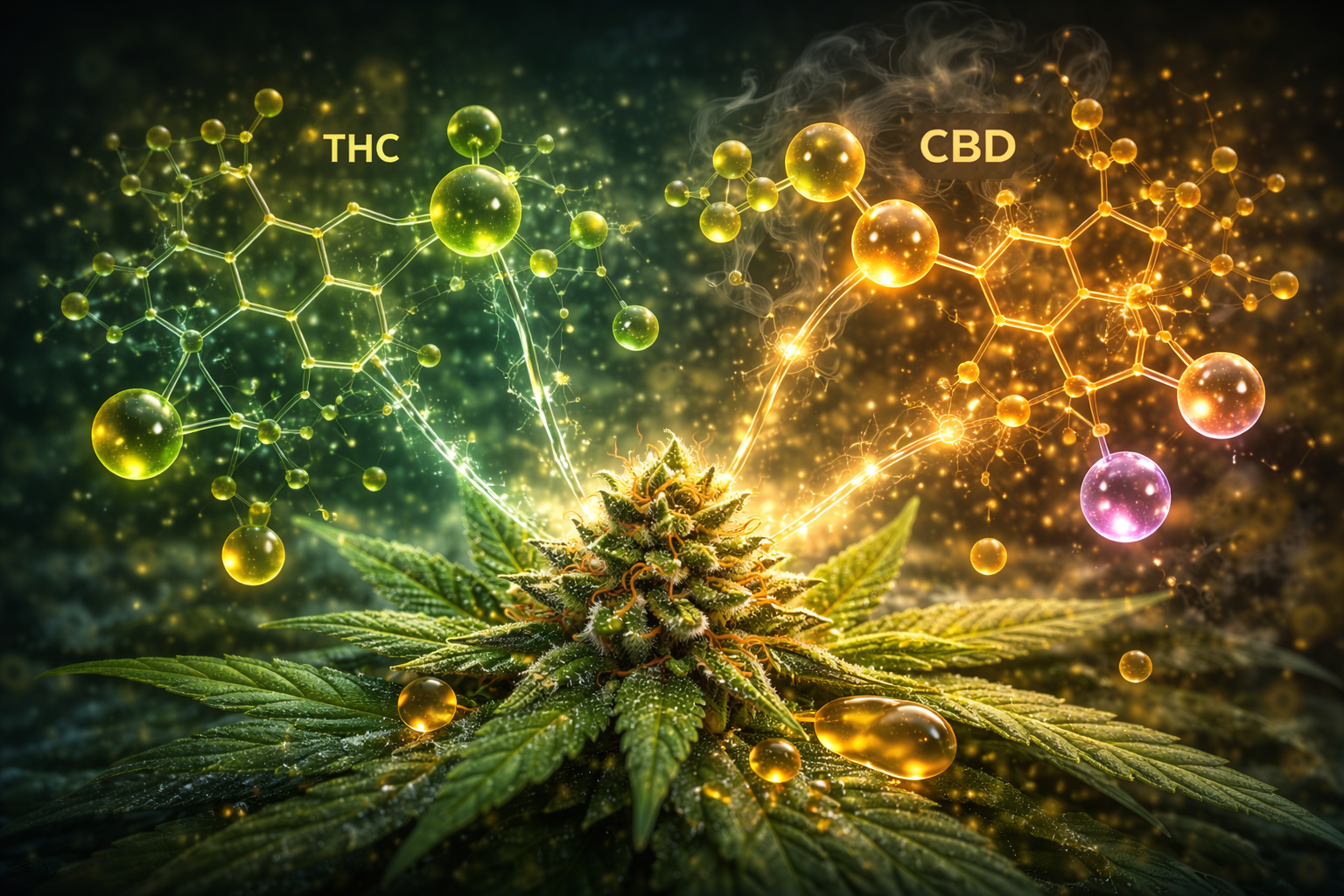
The Entourage Effect
The so-called entourage effect describes the interaction of various compounds found in the cannabis plant.
It is based on the assumption that cannabinoids, terpenes, and other plant compounds work together and can influence each other.
The cannabis plant contains a wide variety of active compounds.
These primarily include cannabinoids such as THC or CBD, as well as terpenes, which are responsible for the plant’s aroma.
For a long time, research focused mainly on individual cannabinoids.
Today, however, increasing attention is being given to how these compounds interact in combination.
How the Entourage Effect Works
The entourage effect suggests that the different compounds in the plant may produce effects together that differ from those of an isolated compound alone.
For example, terpenes may influence the effects of cannabinoids by supporting or modifying certain biological processes in the body.
As a result, the effects of different cannabis strains can vary, even when their THC or CBD content is similar.
This interaction of plant compounds may explain why full-spectrum products, which contain many of the plant’s natural compounds, can sometimes have different effects compared to products with isolated compounds.
Relevance for Cannabis and Research
The entourage effect is an important concept for understanding why cannabis can have such complex and diverse effects.
However, research on this topic is still evolving, and many mechanisms are still being investigated.
Nevertheless, a growing body of scientific studies suggests that the interaction of different plant compounds may play a significant role in the effects of cannabis.
Russo EB. Taming THC: Potential Cannabis Synergy and Phytocannabinoid–Terpenoid Entourage Effects.
British Journal of Pharmacology, 2011.
Further details below
This article is for informational purposes only and is not a substitute for medical or therapeutic advice. If you have any health-related questions, please consult a doctor or another qualified professional.