What are flavonoids?

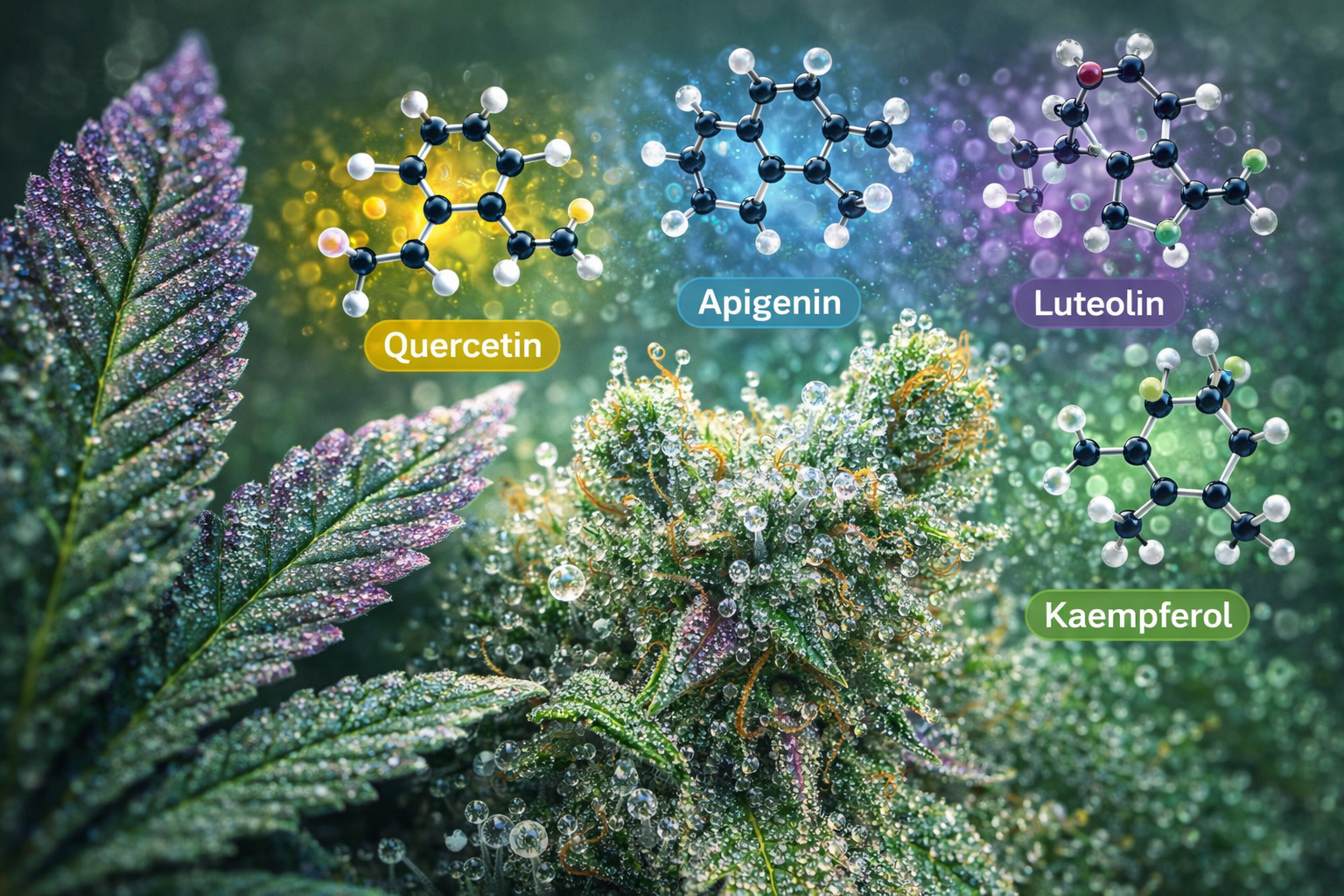
Flavonoids
Flavonoids are a large group of secondary plant compounds found in many plants. Among other things, they are responsible for:
Coloration of flowers and leaves
Protection of the plant against UV radiation
Defense against pathogens
Participation in various metabolic processes
The cannabis plant also produces flavonoids.
Alongside cannabinoids and terpenes, they represent another important class of compounds within the plant.
Flavonoids in the Cannabis Plant
More than twenty different flavonoids have been identified in cannabis so far.
They are mainly found in:
Flowers
Leaves
Partly also in trichomes
Some of the well-known flavonoids in cannabis include:
Apigenin
Luteolin
Quercetin
Kaempferol
These compounds are also found in many other plants.
Cannflavins – Specialized Flavonoids of Cannabis
Of particular interest are three flavonoids that are specific to cannabis:
Cannflavin A
Cannflavin B
Cannflavin C
These compounds were first isolated in the 1980s.
“Cannflavin A and B are prenylated flavones found only in Cannabis sativa.”
Barrett et al., 1986
Further details below
Studies suggest that cannflavins may have anti-inflammatory properties, as they appear to influence certain inflammatory pathways.
“Cannflavins inhibit PGE2 production, indicating potential anti-inflammatory activity.”
Rea et al., 2020
Further details below
Role of Flavonoids in the Plant
For the cannabis plant itself, flavonoids serve several functions:
UV Protection
Flavonoids can absorb UV radiation and protect sensitive cellular structures.
Defense Against Pathogens
Many flavonoids have antimicrobial properties.
Coloration
Certain flavonoids influence the pigmentation of plant tissues.
Relevance for Cannabis Research
Compared to cannabinoids and terpenes, flavonoids in cannabis have been studied far less extensively. However, they are gaining increasing attention in scientific research.
Some studies are investigating whether flavonoids may contribute to the overall effects of the plant together with cannabinoids and terpenes.
This article is for informational purposes only and is not a substitute for medical or therapeutic advice. If you have any health-related questions, please consult a doctor or another qualified professional.