What are trichomes?

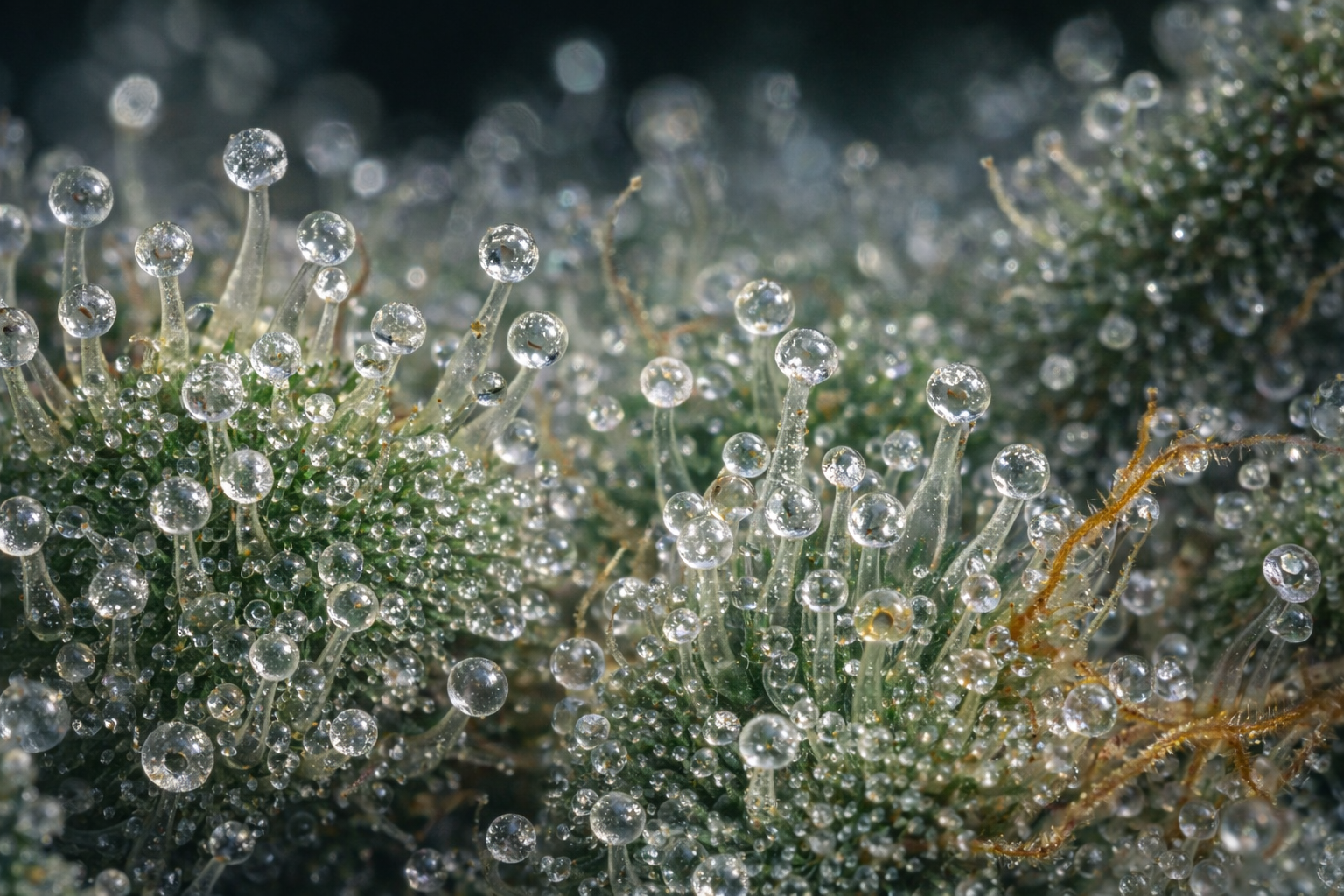
Trichomes
Trichomes are specialized glandular structures found on the flowers, small leaves, and in some cases also on the stems of the cannabis plant. Under a magnifying glass or microscope, they appear as small, crystal-like resin glands.
These structures are responsible for producing many secondary plant compounds, in particular:
Cannabinoids (THC, CBD, CBG, etc.)
Terpenes (aroma and fragrance compounds)
Flavonoids
The high concentration of these substances in the resin of trichomes is the reason why the flowers of the female cannabis plant are medically and pharmacologically relevant.
The Function of Trichomes in the Plant
Trichomes serve several biological functions:
Protection from UV Radiation
The resin layer acts as a natural filter against intense UV radiation, protecting sensitive plant tissues.
Defense Against Insects and Herbivores
The sticky resin can deter small insects or restrict their movement.
Protection from Dehydration
The resin layer reduces water loss and helps the plant survive in dry environments.
The Three Main Types of Trichomes
1. Bulbous Trichomes
These are the smallest trichomes of the cannabis plant.
Characteristics:
Very small (approx. 10–15 µm)
Found across the entire plant surface
Produce only small amounts of resin
2. Capitate-Sessile Trichomes
These are slightly larger and have a resin gland without a pronounced stalk.
Characteristics:
Larger than bulbous trichomes
Produce measurable amounts of cannabinoids
Commonly found on leaves and flowers
3. Capitate-Stalked Trichomes
These are the most important and largest resin glands of the cannabis plant.
Characteristics:
Clearly visible stalk
Large resin gland at the tip
Primary site of THC, CBD, and terpene production
Most of the active compounds in cannabis flowers originate from these trichomes.
When Are Trichomes Ripe?
During the flowering phase, trichomes change their color. This process is often used to determine the optimal harvest time.
Typical stages of development:
This article is for informational purposes only and is not a substitute for medical or therapeutic advice. If you have any health-related questions, please consult a doctor or another qualified professional.